


When Mines Move In, Where Does Wildlife Go? Revisiting Iran’s Arasbaran Forests
- Yasamin Molana
- Apr 21
- 3 min read

Adapted from a Persian field report originally published by Mehr News Agency in June 2011.
The original report was among the outlet’s widely read environmental reports at the time.
In the forests of Arasbaran in northwestern Iran, the conflict was once visible in the simplest way: wildlife retreating as bulldozers advanced.
Arasbaran, recognized for its biodiversity and home to rare species including roe deer, bears, and the endangered Caucasian black grouse, was, even in 2011, under pressure from expanding industrial and mining activity beyond protected zones.

That year, I reported from the region for Mehr News Agency, documenting growing concerns that industrial development was reshaping landscapes faster than environmental protections could respond.
At the center of those concerns was a difficult question: what happens when protected ecosystems border economically valuable mineral reserves?
Stretching across mountainous terrain between Kaleybar, Varzaqan, and Jolfa, Arasbaran contains both protected forest and unprotected rangelands. Those unprotected areas, several experts warned at the time, were increasingly vulnerable.
“Metal mining in forest regions is one of the biggest problems for natural resources here,” said Abdollah Rasouli, a natural resources expert I interviewed during the reporting.
He described exploration activity, road building, and industrial construction as pressures extending beyond officially protected zones.
In some areas, he said, bulldozers had already altered wildlife habitat.
Residents and environmental observers pointed not only to habitat fragmentation, but also to pollution risks.

Dust from extraction, they warned, could damage vegetation. Wastewater and industrial runoff raised concerns for streams and river systems near mining operations.
Officials also acknowledged regulatory gaps.
Biouk Raeisi, then head of environmental protection in East Azerbaijan province, told me that while protected areas faced stronger oversight, enforcement in areas outside those boundaries was much weaker.
That legal imbalance, he suggested, created room for industrial expansion in ecologically sensitive areas.
Even then, the issue was not framed simply as industry versus conservation.
Mining brought jobs. It supported development. And in a region rich in copper reserves, those economic arguments carried weight.
That tension made Arasbaran more than a local environmental story. It became a case study in a broader dilemma still relevant far beyond Iran:
How should governments balance extraction, investment, and biodiversity?
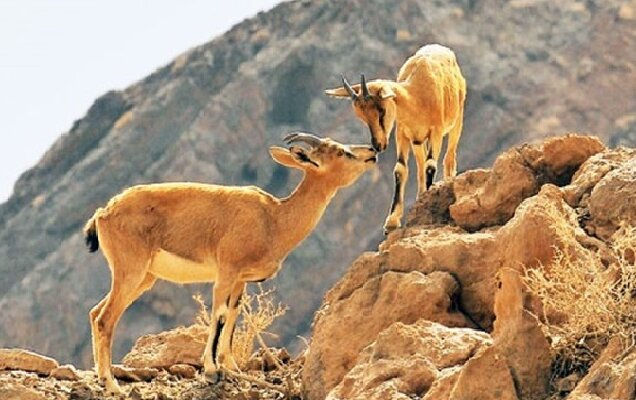
In Arasbaran, the question felt urgent because the ecological stakes were unusually high.
The region was known to host roughly 1,400 plant species within a wider provincial total of 2,400 identified species, according to figures cited during the reporting. Rare wildlife depended not only on protected cores, but also on surrounding ecological corridors.
And those corridors, experts warned, were increasingly exposed.
One image stayed with me from that reporting: concern not only for forests, but for wildlife forced to adjust.
Where do animals go when their habitat is steadily narrowed?
It was partly that question that shaped the original headline of the Persian report, which imagined Arasbaran’s wildlife “searching for another home.”
It was a metaphor, but it captured something real.
More than a decade later, the underlying question remains relevant—not only in Iran, but globally, as demand for minerals linked to industrial growth and even energy transition continues to collide with biodiversity concerns.
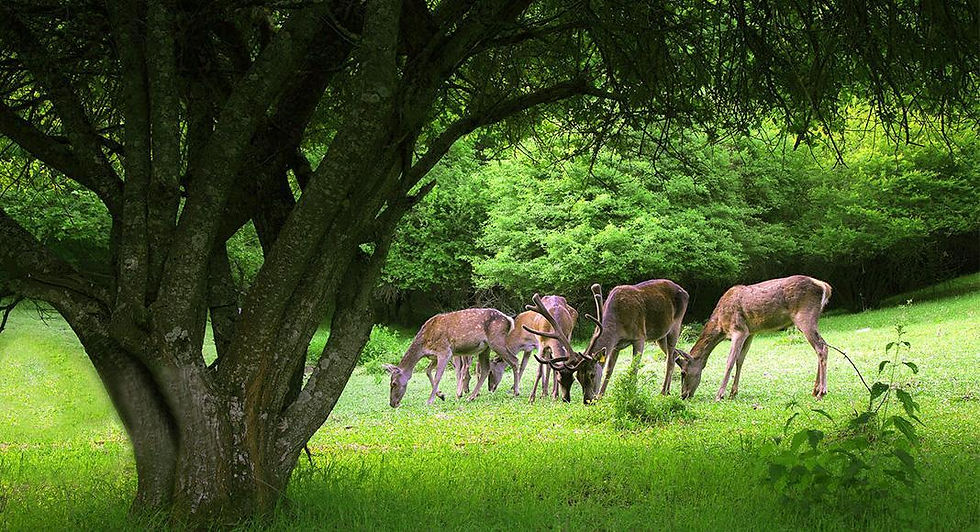
The story of Arasbaran was never only about one forest.
It was about what happens when environmental law is unevenly enforced, when unprotected landscapes absorb pressures that protected zones deflect, and when development moves faster than ecological safeguards.
Those questions, first raised in a Persian news report in 2011, have not disappeared.
If anything, they have become harder to ignore.
By Yasamin Molana,
Environmental communication researcher and journalist


Comments